A chimney flue is the inner passage, usually a clay tile liner, a stainless steel liner, or an unlined masonry shaft, that carries smoke and combustion gases out above the roofline. When a homeowner says "i got my flue…
A chimney flue is the inner passage, usually a clay tile liner, a stainless steel liner, or an unlined masonry shaft, that carries smoke and combustion gases out above the roofline. When a homeowner says "i got my flue clogged," the blockage is commonly a nest, fallen tile shards, heavy creosote glaze, or debris packed at a bend. Flue cleaning removes soft buildup and light obstructions; clogged flue repair addresses the cause behind the blockage, such as a cracked liner tile that keeps shedding into the passage. A Level 1 inspection covers readily accessible areas on an annual sweep; a Level 2 inspection adds a camera scan of the full flue interior and is the standard used before quoting any relining, sealing, or repair, in line with Chimney Safety Institute of America (CSIA) guidance.
Three liner options fit three situations. A clay tile liner suits an existing masonry chimney with isolated cracked tiles and is the lowest-cost repair when only a section needs replacement. A stainless steel liner fits a wood stove, pellet stove, or gas appliance insert and is the common choice when tiles are broken across multiple sections or the chimney was never lined, it is sized to the appliance outlet, typically 5.5", 6", or 8" diameter. A cast-in-place liner fits older Belvidere and Walnut Hill masonry chimneys with irregular or deteriorated interiors, forming a new smooth passage inside the existing shaft. The trade-off is straightforward: a single cracked tile is a targeted repair, while stainless relining rebuilds the entire flue path and carries a longer warranty on the liner material.
Sealing off a flue is a separate job. Homeowners who convert to gas heat or stop using a fireplace often say "i want to seal it off", that means capping the top of the disused flue with a sealed top plate and, where applicable, a rigid cap, so rain, snowmelt, squirrels, and cold downdraft stop entering the chimney chase. A flue in active use is never permanently sealed; only a fully retired flue is closed. Homes in the East Side, Corbin Heights, and Vine Street area with two-flue chimneys often keep one flue active for a furnace while sealing the abandoned fireplace flue.
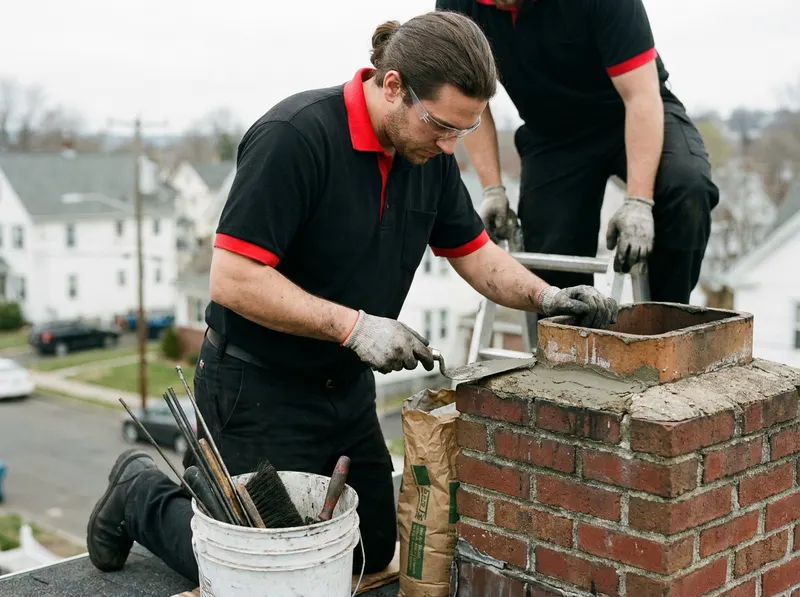
The process runs in order: (1) a camera scan documents the flue condition top to bottom; (2) the findings are shown to the homeowner as photos, including whether the flue is actually damaged or simply dirty; (3) a written scope names the exact liner size, material, and any sealing plate needed; (4) the repair, reline, or seal is completed and the finished flue is re-scanned to confirm clearance. If the camera shows the flue is sound and only needs cleaning, that is stated plainly, no repair is added to fill out a bill. New Britain sits in Hartford County where wood and pellet stoves see heavy winter use around Stanley Quarter and Osgood Hill, and glazed creosote in those flues is the most common reason a passage narrows and starts to draw poorly.
A free on-site estimate confirms the scope and price before any work begins. To reach the crew, call (860) 925-9565 or text a photo of the chimney top and firebox.
Every job gets a firm, written price after a free on-site visit.
Tell us about your flue repair & sealing job in New Britain and we'll send a clear, written quote, usually the same day.
 Flueking Chimney Sweep